Louison Ryser
TW: Writing this bio about herself, Louison feels as though she’s taking a slightly awkward selfie in her bathroom, but he goes with it and plucks up his courage (because if you keep finding everything cringe-worthy, you might end up being that way yourself).
As a child, LOUISON often wondered whether they were living in a simulation. Today, this hypothesis leads them to view reality first and foremost as an aesthetic, a grammar and to feel infinite tenderness for images that lie and for incomplete archives. In the mirror’s reflection, they sometimes see their skin shredding – BODY HORROR – so they write palimpsests over their tattoos, a mother tongue crocheted in XXL style. With L’Abri, they dream of creating artificial landscapes in which to organise counter-parties.
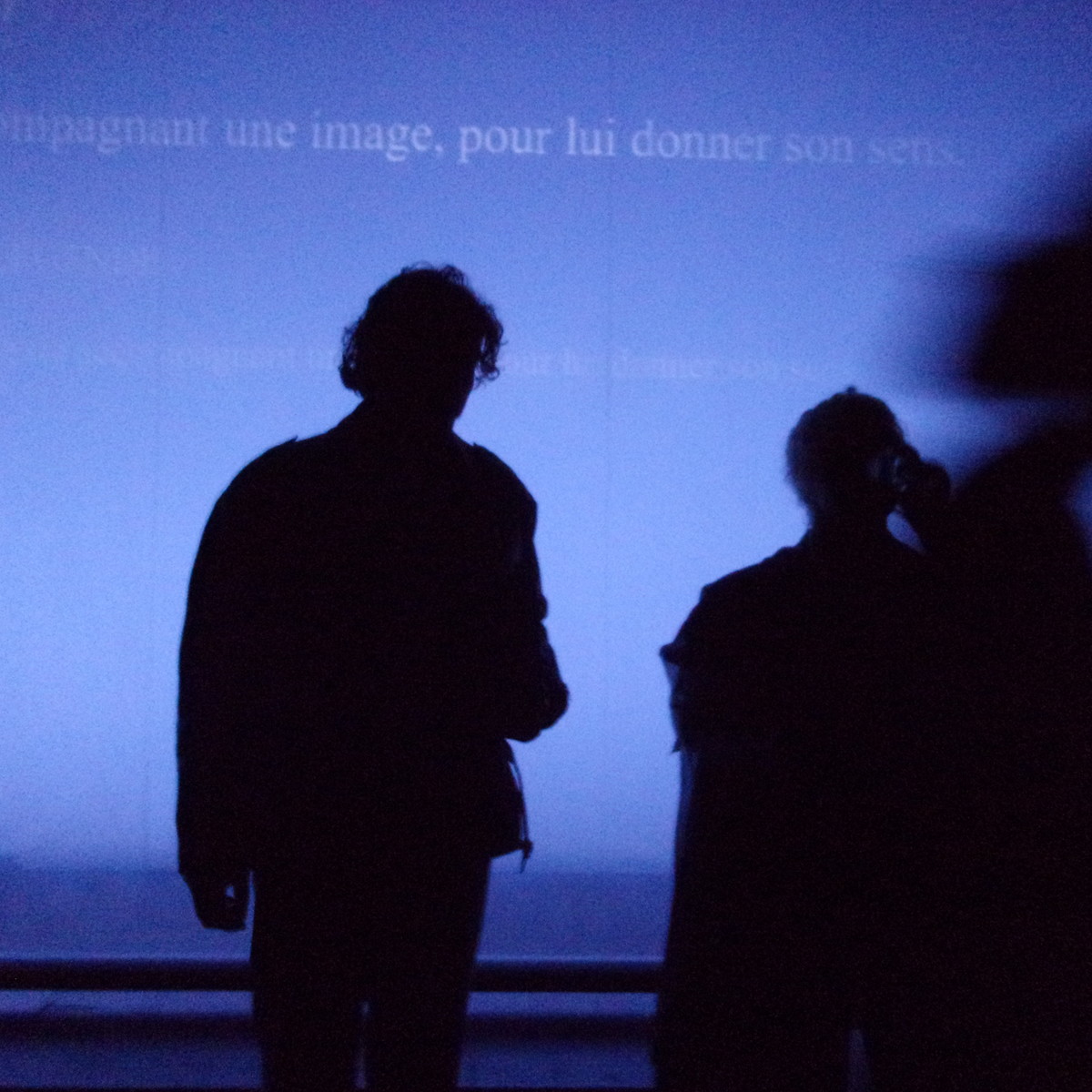
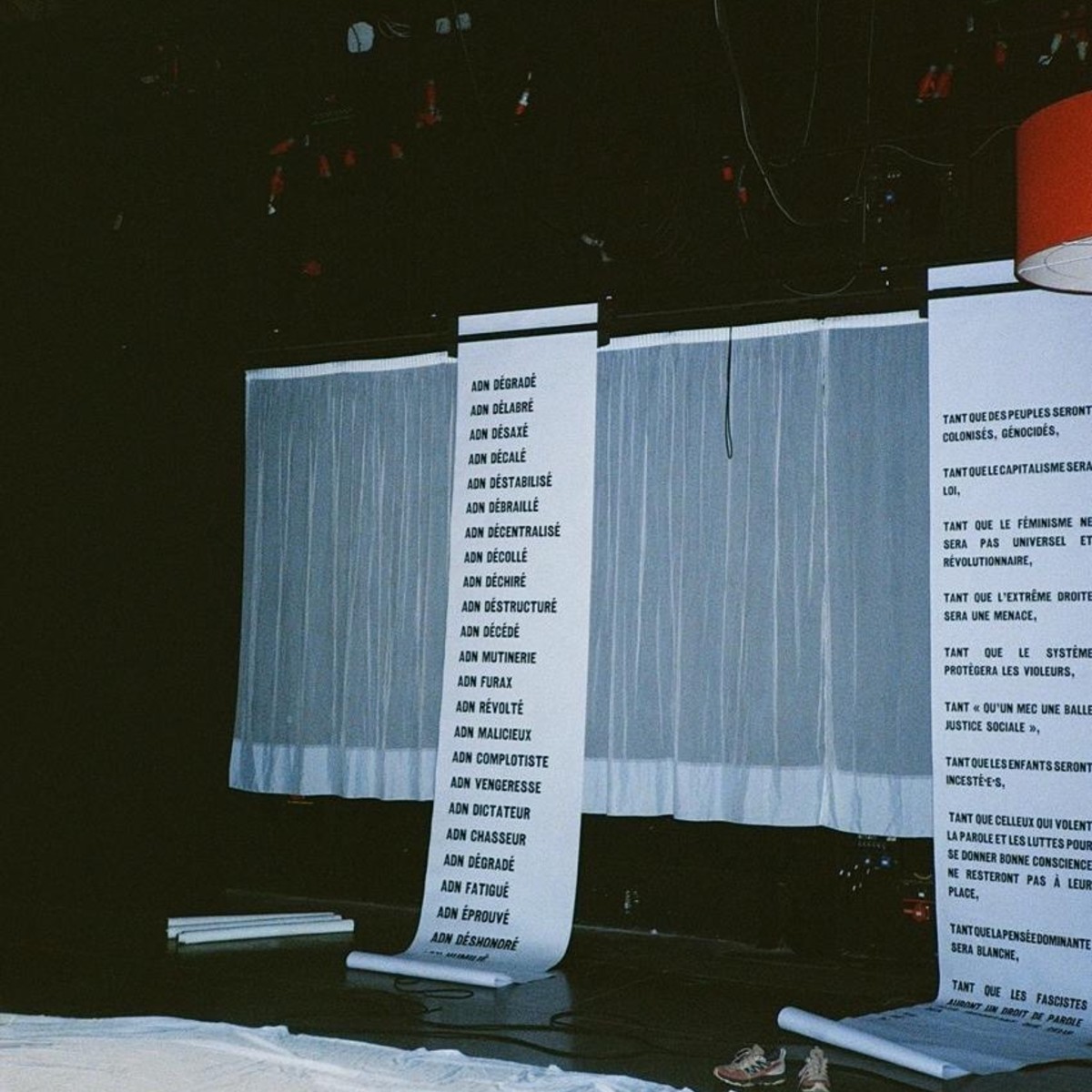
Louison is a dramaturg. He likes the gender-neutral nature of the term, and the fact that nobody really knows what it means. Having studied film and audiovisual media and theatre studies at the Sorbonne-Nouvelle, followed by playwriting at the École du TnS, she now works alongside various artists in France and French-speaking Switzerland, as well as within the V.R.A.C. collective. Concerned with issues of appropriation and extraction, he has also conducted research into the paradoxes of diversity policies in contemporary theatre as part of a Master’s degree at the University of Paris-Nanterre. Louison approaches her playwriting through the logic of editing: watching – choosing – cutting – assembling – watching again. She sees it as a tool that is both aesthetic and reflexive, an act of writing as much as a means of questioning our regimes of truth. At present, she is interested in fictions of order and is exploring Swiss military folklore, bunkers, apocalypses that have already occurred and those that are yet to come. When it’s time to go to bed, she wonders who on earth decided that you need to sleep for eight hours a night to be productive, and starts imagining a general sleep strike. During these sleepless nights, he explores cultural spaces as grounds for new forms of collective thinking to emerge. Sometimes, he shares the dysmorphic children’s tales he writes in the dark. Accompanied by the monsters lurking under his bed, he lets the texts spill over, seep out and cover the walls, creating new surfaces for reading.